Structure & Geography
Major Bridges
Medulla was one of these bridges, but very little was known about it.
Cervical: It connected the Hammerlowian ring of Jast to the Kasino. It featured lavish halls, clockwork devices & an intestine-like shape or structure. It also connected to the Glazze’s rolling hills with nice breezes.
Seeker: This was rather quiet and led to the western mountains, where the Watchers ended & began.
The Glazze
This was the part of the Kivouack representing the furthest reaches of the city. The border between this location & the rest of the Kivouack was called the Madness Frontier. Under the city, the Glazze featured a river & lake system being fed by Eastern oceans. Some specific locations included Wulvumption Rift, Mottwood Hill, & Blackwood.
Shiverpike Mine: This was one of the many mines through which the Yolsh retrieved materials for the city such as erillion. As of Amygdala, the Overseer was in charge of the place.
The Kasino
Topside
Vallahead: This was the home of Raloma – the Voice of the Sky. One would need to find a pool or shade as it would get hot in the early Tones. Most of the population there had wings to navigate them.
Hullugard: Little was known about the town beyond it housing the Sage Gardens, in which every one of its flowers was poisonous.
Innerside
Tessio: The town had been known as a former hub for the Trade Cartels prior to the end of the Trade Revolution.
Underside
Supposedly, the Dousers & Crawlers in this region were relatively aggressive & very territorial.
Vileborne: This town was south of Miviam & was connected by the Lockton Black. It was generally associated with Cockney accents.
- Modrick Square: All that was known was how it connected to Teal Street.
- Teal Street
- Tisher’s Hide: This was a Laughhouse which provided dark/heavy drinks & solitude.
- Peaky Street: It was a long & winding road of black cobblestone, featuring some of Vileborne’s proudest shops.
- Conline’s Chopshop: It wasn’t far from Needlemire. Being a rather small Chopshop, it was up to 100 square feet with a height up to 300 feet. It was within Sefton’s Bookburrow’s jurisdiction and reach.
- Needlemire Dollhouse: This Dollhouse was well respected within its town to the point where locals would call it legendary. Outside, it didn’t have a lot of influence. It featured heavy doors at its front. The rooms inside were accompanied with named doors, one of which was Pixie.
- ?
- Sefton’s Bookburrow: It sat Westward & away from the Lockton Black, tucked in its own private street. It was Sombrarian, or wooden with metal framing. Its red stained-glass windows presented history & facts. Its doors, which had smaller doors within, had engravings of construction records, dates & the Architects’ signatures.
- Feaverfire Bloodhall: It was like a city block-sized, Winiwardian, angled cube, which ranged into the underlayers. Carvers would wear red velvet jackets, trousers & short-brimmed hats with rounded crowns. Dollies would entertain visitors as the place became a hub of trade. A water fountain sat at the center of the viewing gallery. Bleeders had to maximize showmanship, defeat by force, fight independently & enter unburdened. Those with contraband were generally terminated.
- Harley Street
- Gideon Waterway
- Vileborne Grates: It possessed a large hall-like street, ghostly fog, wooden planks over a canal, wooden walls, dockyards & a bridge network as a ceiling. One of its ends led to the Lockton Black.
- Lockton Black: Being in a valley far below Vileborne, it connected the town to Miviam. It was once a valley of markets before the Trade Revolution & the Flood.
Farroway: All that was known was how it was a small riverside village.
Harrowton: This town was north of Vileborne but south of Miviam. It was also a lakeside town.
Meggyway: It was only known for being connected to Harrowton via a Sombrarian/Mandosian bridge.
Miviam: It was north of Vileborne & connected by the Lockton Black. Few Crawlers & Gliders lived there.
- Royden Street: It was shaped like a spiraling warped helix and connected to Virerose Street & Shakels Square. It featured Dollhouses, Tailor Shops, Chopshops & Laughhouses.
- Marvel’s Chopshop: It featured 7 Chefs & 4 kitchens. A kitchen featured lime green tiles. After Marvel died in 1816, Merrin took over the place and called it Harvey’s.
- Piper Street
- Ruthergush Inkhouse: Originally founded by Ruby Ruthergush, it was a Lockettian establishment with stained glass windows. Wyley, later replacing Ruby, had his office on the 7th floor.
- Lucy’s Chamber: It basically mirrored Shale’s. It included a large southern desk, a northern bed, eastern glass doors leading to a balcony with black gates and a central brick pillar with framed papers & machine parts.
- Warehouse: Being beneath the main building, it was marked by black brick and a high ceiling.
- Virerose Street: It was connected to Piper Street & Royden Street.
- Shakels Square: It was connected to Royden Street & was a wide market west of the Lockton Black. Large establishments were around the perimeter, while freelance stalls from out of town took up some of the remaining space. At the center stood a fountain depicting the bodies of Trade Cartel members.
- Entervowel Street: At Miviam’s outskirts, it was connected to Shakels Square. Jewellers, Toyshops, Tailor Shops & Bookburrows were generally at its right, while Dollhouses, Chopshops & Laughhouses were to the left. A Douser channel rested above & parallel to the street.
- Tickletwine Laughhouse: This was known for its high spirits and dark wooden walls. Its 3 floors were accessed via a carpeted staircase, while it boasted oakish pillars & finely carved banisters. A bar top rested behind the stairs & in front of a tall tower, which touched the ceiling & was full of stock behind locked metal gates.
- Browbeater Bookburrow: This was a Sombrarian building of raggedy wood & a metal frame. It was at the left side & near the end of Entervowel. One room had nearly all of its surfaces marked by books, papers and trinkets. Its high ceiling had a swirling appearance, lined with metals, spices, chemicals, fabrics, stone, string, powders and books while being not unlike the overall sprawling layout. It was founded in 1425.
- Klayton Street
- Vicky Street
- Looie Docks: Being in the town’s underlayer, it was near Piper Street.
Liverton: This was a town of hamlets ever since the Flood of the Trade Revolution and mostly home to Dousers, who would get on land to partake in the local culture.
- O’Farrell’s Tailor Shop: The wooden building with exquisite metal framing had its wide entryway adorned with fabrics, silks and jewels, alongside dry and soft red carpets. It also included stained-glass windows and a set of stairs with winding wooden banisters. Within the dressing rooms, sewing machines rested with windows, curtains, bodies used to display outfits, mirrors, large leather armchairs and rickety wooden chairs.
- Hall of Masks: This area was at the back of the building, being rather self-explanatory. The hall was lit by a clear glass wall, had oceanic tiles, had old iron chairs and possessed walls of swirling wood decorated with exotic masks. A long wooden table with white frilled cloth surrounded the area.
Winiward:
Ol’ Frankby: This was the oldest Kasinian town, which provided much of the materials needed for the city’s construction. It was many times Miviam’s size, with a stronger mix of accents. It was of a Lockettian design with dark brick, machinery and metal. It was implied Yeshua also held a lot of influence over the gothic town’s culture. Smooth cobblestone, black grass, Blackenrend trees, and flowers were illuminated by the usually purple and orange light. Most of its millions of inhabitants worked for local trades. During the city’s construction, it was a quiet place of mostly Steelyards.
- Greasby Lane:
- Savier’s Dollhouse: The Lockettian Dollhouse was of black brick and pale metal. It included heavy metal doors, which possessed systems of cogs and gears, and 50 rooms of generous sizes. Its lobby or gallery had a royal green carpet, with red details, and tall viking-like pillars. 1 of the rooms – the Evelyn Chamber included a warm scented pool and overlooked the Bluewood Gardens via an opulent balcony.
- Haltic Triangle
- Voltic Triangle
- Old Whispering Bridge: The bridge provided a view of Yeshua’s Circus and northern docklands. Hundreds of Starlook papers hung from the railings.
- Starklook Inkhouse: Being tucked behind the ports, it was the most well-known Inkhouse in the Underbirth and the tallest building in Ol’ Frankby at over 1000 feet in height. Black brick, spinning clockwork, colored glass, black metal and a crown of smoking chimneys marked the place. It had a hall of printing machines. Steelyards sat opposite to the Lockettian building.
- Javier’s Chamber: The shelves were tatty and a cluttered desk rested near a round window.
- ?
- Crossed Arms: This was a tall Sombrarian Laughhouse with dark thick stained-glass windows with scratche, an old door, cushioned booths, 5 floors of seating and black metal balconies. Its walls were wooden at the first 5 feet of height, followed by red and gold paper up to the ceiling. Its 5th floor had 20-foot-high doors and framed pictures/papers depicting a long history of service.
- Merryland Bloodhall
- Bluewood Gardens: This was a small forest of exotic flora, with its flowers being from the Vellen Fields.
- The Grange: This was the biggest forest in the town, being at the center of it. This included gaunt grey flowers, grey stone statues, black grass, stone and rivers, all while being surrounded by red brick walls 100 feet high. Its twisted Blackenrend trees included Deathroot, Poisonfang, Ironbranch and tall Ash Sentinels.
- Gilifray Grotto
Yeshua’s Circus: This was the large island in the middle of the Roxxy Lake & the most populous Kasinian town. It included brass cylinder walls emitting music & steam, copper strings in wooden frames, crimson & violet curtains and sensational statues. It was marked by a prevalent red phase. The place included Whitegold Bay, Wyver Overlook, Mave Street, Robalynd Park, & Blighty Boulevard.
- Lashawrithe Bloodhall: It was the island’s eastern peninsula & extended deep into the Kasinian crust.
- Katch Laughhouse: This was at the north coast & guarded by seaside rocks.
- Batterclash Chopshop: This was west of Katch, & too, was guarded by seaside rocks.
- Delamere Dollhouse: This acted as the island’s southern port, facing Ol’ Frankby. It has cobblestone streets, complex instruments and extravagant décor & stages. Beetle Street was included.
- Empire Theatre: This was the island’s cathedral-like cubic centerpiece. It was 5000+ feet in height, while possessing dark stone, erillion patterns & large headless statues. Its mouth was 200 feet tall and with a long red carpet & steps.
- Yeshua’s Chambers: Being within the upper halls, it featured a bending net, soft red rugs, a round southern window, bodies, soft couches, glass tables and a tall dark ceiling for the Rule of Intended Orientation. A collection of skulls was used as cups.
- Arc Red: This was one of the 3 areas for the Empire Theatre’s 2nd level, specifically meant for the Paradigm, Yolshen elite, industry leaders and some of the most celebrated Dolls/Dollies. It was the topmost of the 3 areas, with its floor tiled with green and black glass like a checkerboard. Like the other Arcs, it had market stalls, a large central fountain and a northern balcony guarded by stone pillars.
- Arc Black: This was for the more accomplished individuals, separated from the elite and the common.
- Arc Silver: This was the lowest of the 3 levels and for most of the Underbirth’s population.
The Hammerlow
Unlike the Kasino, this part of the Underbirth includes Bathhouses. It is common etiquette for each Hammerlowian street to be occupied by at least 4 Yolshen soldiers. The Dousers there are generally far friendlier than their Kasinian counterparts. Each ring had its own poles to determine directions. Clockwise around the ring was north, anticlockwise was south and east/west was around the width. A Douser channel would serve as the core of the ring.
Sec - Ring of Trade
This was the 1st and outermost Hammerlowian ring.
Lovart: This mostly Winiwardian town was at Sec’s underbelly, facing the Thumme. It didn’t burrow deep into Sec’s crust. Water channels, some of which were home to rather friendly Dousers, accompanied most of its paths.
- Tyler Street
- Lovart Square
- Pterygoid Doorway: It was over 1000 feet in height and only showed its lavish corridor from the front. From the back, it appeared as only its arch.
- Lovers Court
- Dodger Street
- Bold Street
- Highclay Bookburrow: The tall stone building, which was many times Browbeater’s size, was lined with pillars and had its name engraved in gold above the doors. Its lobby was like an illustrious bank marked by polished black floors and pillars holding up the high ceiling. A long stone table was for 7 Bookkeepers. Celia was one of the oldest clients to Highclay.
- Hallow Street: It was a steady slope split by a clear blue waterway. Tall buildings of all styles sat at its sides.
- Janella’s Laughhouse: It was a sunken Sombrarian building between 2 neighbors of white stone, all with dark wood, darker metal and dirty stained-glass windows. Its high ceiling acommodated nearly any Kivva’s height, while the floor was wooden. Few pieces of furniture remained after Janella’s death, alongside 3 crates behind the bar.
- ?
- Polly’s Tab: This was once a Toyshop of carved stone, sculpted erillion metal and stained-glass windows. Its main doors were 100 feet high and accompanied by automations at both sides. One was meant to be a bipedal male, while the other a wolven female. A water channel circulated throughout the building’s interior. A large stack of slowly rotating platforms, which decreased in size the higher they were, sat at the center of the gallery and presented some of the business’ stock. These items included dispersive lenses, wooden math puzzles, instruments and puppets. That same gallery had a high overlooking balcony. Labyrinths of white bridges, string, fabric and hanging baubles rested below a stained-glass window toward the rest of Lovart.
- Polly’s Chamber: The chamber itself was massive and cylindrical with a 50-foot-tall conzentine at the center. The place was connected by a low tunnel which had the water channel and its stony path spiral gently, all while being littered with unfinished works of Polly.
- Polushka Bathhouse
- Dail's Bookburrow
- Roland's Chopshop
- Walter Whisk Tailor Shop: The tall building had lots of Lockettian windows and a pair of metal doors. Rottulated bodies would display some of the business’ stock.
Westshire: This was only mentioned.
Jast - Ring of the Yolsh
Being a hub for the Yolsh, this included thousands of Yolshen academies. Technically, anyone could’ve visited it.
- Dyler Hall: This Winiwardian location was mostly recognized for the tons of legends it featured. Thousands of Yolsh at a time would train in its corridors, arenas, pools & lecture theaters. Mirror-like textures, big courtyards & 11 lake-sized, freezing, tiled pools marked this place. The courtyard utilized white stone & gentle waters.
- Cornell’s Laughhouse: This was often for Dyler’s teachers & students.
- Svanir Pool: It was 5000 feet deep. Silver, sapphire, emerald & gold tiles would create swirling, symmetrical images.
Thay - Ring of Gardens
Khan - Ring of Ministry
Loc - Abandoned Ring of the Institute
This was the former home of the Institute of Sciences. As of Amygdala, this remained abandoned and nobody was able to enter it.
The Thumme
This Mars-sized, green sphere acted as the city’s political nucleus, home to Voices, Whispers & renowned Yolshen soldiers. It behaved much like the Kasino regarding general structure, but it was more compact, more snug & cooler. The streets on its outer surface were rarely used and held no departments or trade. They were simply quiet pathways.
The Astral Watchmaker
Spanning hundreds of miles, this main Songtower acted as the centerpiece of the Thumme. It shot through the Thumme’s hollow core, had no artistic carvings & was Lockettian, designed with only mechanical necessity in mind. It was mostly metal, had black wire sinew, had bones of anchoring pipes & got inky brick for flesh. 100 ft tall pistons were at the base and small mechanical windows were above the 1st quarter of its length. Its 7-faced head had massive, green-tinted, circular, ticking windows. Its interior was cold and had its walls muffle outside sounds. A carpeted staircase littered with mangled puppets accompanied by angerly torn wallpaper and pictures of Fowlers playing with toys led to the spire. The top chamber had a tattered carpet with fading red patterns and a wide collection of toys.
The Paradigm Court
This cylinder-shaped structure rested below the Astral Watchmaker. It had a domed ceiling and walls ringed with thousands of galleries for Whispers. It also included a lectern taking the shape of a 50 feet tall massive column of mostly wood. At its peak, where the Paradigm Judge would sit, mechanical controls were ready for each session. This lectern was surrounded by a rotating glass disk, which included its own grand lectern and 5 rings of wooden desks. The inner ring was for the Descendants and other Voices, the next 3 were for prized Whispers and Voice aides and the outer ring was for esteemed Inkers. 5 stone walkways connected the disk to the court’s walls, while Mandosian veins of brass acted like speakers.
- Scribes Department Workplace: Placed at the center of the court’s domed ceiling, a rotund office had a circular hole in its floor guarded by wooden banisters and a surrounding desk.
Lullaby Loft
It sat above the Astral Watchmaker’s spire like a hive, serving as the 1st known hybrid of institutions in the city. Its size was like that of Whitefall.
- Dollhouse: This was Sombrarian.
- Laughhouse: This was Winiwardian.
- Chopshop: This was Lockettian and like a royal kitchen. It had an intricate tile floor, elaborate windows & metal furniture. Its top level managed to reach the Thumme’s outer surface, as the very top of the Thumme. It also had warm couches, glass tables & silver plates for food.
The Halo Chamber
This massive Bathhouse was north of the Astral Watchmaker. It had elaborate tiling, trickling rivers and waterfalls.
- Lungus Region: It included a steamy oceanic pool, soft scents and floral displays on mighty pillars.
The Platform
Being the main entrance to the Thumme with a Mandosian doorway, it was south of the Astral Watchmaker. It was a massive Winiwardian foyer marked by a fountain of Freyda’s body. Walls were rimmed with 1000 archways & balconies, accompanied by a big round window of green and blue glass. A Mandosian doorway & arch was its connection to the rest of the city.
Whitefall
It was to the west of the Astral Watchmaker, opposite to Witchen and overwhelmingly Winiwardian. It had an entrance of stone pillars, marble steps and a gold carpet. It was known for its harsh shapes, stony strength and extreme brutality, with deadly rivers of fire and liquid metal to vast lakes of gold and sweating heat. The hardiest Yolsh would work here. Punishment against certain Yolshen soldiers would have to run the length of these rivers until completion or rottulation. Galleries were dedicated to humiliating from fallen Yolsh to historical figures. The farthest fallen were kept as torsos on stone pilths.
- Masseter Gallery: This was where the most infamous failures remained.
- Rold: This was a collection of icy lakes.
- Starkgold River: This was accompanied by a large black tower, which was home to Wexle, and a Winifred state holding up the ceiling.
Witchen Library
Nearly resembling a gigantic Bookburrow, this was east of the Astral Watchmaker.
- Icen Spine: This was Witchen’s mathematical center full of blue & green light, geometric shapes and designs for maximum functionality.
- Amberlight: This housed fiction, songs and poems, all while being one of the busiest subdistricts. It was known for its curved bookcases, red brick, flowing golden water channels and pretty little steamboats for Whisper travel. Transcriptions were mainly based on demand and sent to Bookburrows. Whispers would analyze works, sing their favorite songs and more. The place even shared its Laughouses and Chopshops with the Icen Whispers.
- Bridge of Dallah: This straight bridge linked Amberlight to Hollowthine. It was known for its high black stone towers, smooth grey flooring, rimming thorny gates for the towers and white light.
- Hollowthine: This was described as a stony series of chasms over a black abyss, netted with flowers. These flowers included Roundheads, Squareheads, Light-thrashers, Back-slashers and Wide-faced halosailors.
- Venesis Archives: Being one of Witchen’s largest districts, this overwhelmingly Lockettian area housed government reports, legislation and court transcriptions. Deep green rails with interlinked carriages hundreds of feet long like centipede rollercoasters and mechanical doors opening only for moments provided lavish transport between stations. Clockwork instruments and chains further defined the area.
- Hellzire: This contained Yolshen records, trial records and inquiries.
Lecture Halls, Reading Rooms, & Chambers
- Brownian Reading Room: This was a quaint, humble, quiet and warm area with ornate shelves equipped with iron chains and thousands of books.
- Geralt Reading Room
- Grendlewood Reading Room: It was a small, quiet & humble room, occupied with lots of books & cozy Sombrarian furniture. Wooden structures, leather couches and dark metal ladders rested here.
- Hucklewaver Lecture Hall: It was a rather medium-sized room, including 500 seating rows and a large desk at the center.
- Silverhold Reading Room
- Syther Lecture Hall
- Redhorn Reading Room
- Barnaby’s Chambers: Being next to Methusa’s chambers, it was somewhere between Witchen & the Halo Chamber. It was home to Methusa’s wards as well as many of Barnaby’s old patients and their descendants. Anything wooden experienced overgrowth.
- Methusa’s Chambers: It had 1 dark wooden entrance door with multiple locks leading to a humble & cozy room. Trinkets, books, baubles & dried flowers helped to occupy alongside an intricate tattered carpet. No windows were present. Another door led to a staircase & a third door led to the office. The high ceiling featured a dried painting of flowers.
- Locket's Chambers
- Quinn's Chambers
Culture & Economy
Styles of Fashion & Architecture
Lockettian: In fashion, this style was associated with silks, jewelry, and overall metal. In architecture, this referred to designs of maximum industry and utility, with brick, pistons and metal.


Winiwardian: In fashion, this meant either minimal clothing like satchels or no clothing at all. Its architectural style utilized stone, marble and bodies quite extensively.

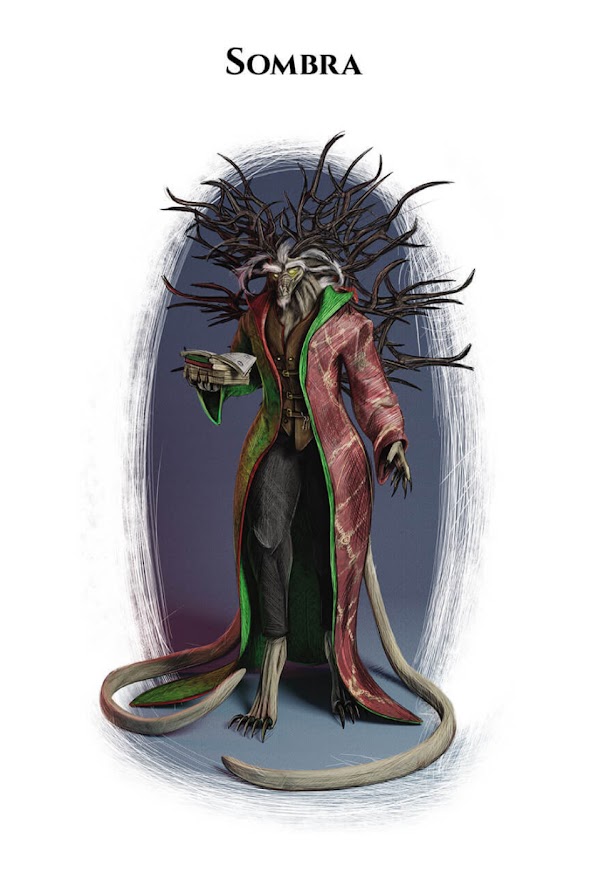
Sombrarian: In fashion, this was associated with leather and waistcoats. Its exemplified buildings were of wood with metal framing.


Mandosian: The style was mostly known for being able to bend space-time and make it easier for Kivvas to travel through this Saturn-sized city. It could've taken the forms of doorways, rivers, bridges and tunnels.
Establishments & Jobs
It was an unspoken rule for employers to not hire Fowlers.
Yolsh
They were the city’s primary means of law enforcement and created by Winifred. Their ranks depended on the number of Strikes each soldier had. Better trained members were able to make some of their biomass into weapons like blades, axes, large needles, etc.
Student: They were the ones with 1-2 Strikes earned.
Officer: 3-6 Strikes marked their bodies.
Captain: They had 7-9 Strikes.
General: They had to have earned 10 Strikes to get the position.
Watcher: They were a special factor of the Yolsh tasked patrol the Madness Frontier, border patrol.
Yolshen Marches: Devised by Winifred to scare Freydan loyalists, used in the war against the Howling Brigade
Songtower
Beyond the living light, each one helped to keep track of time, especially by releasing a chord to start each Tone.
Bookburrow
They were the Underbirth’s banks, routinely restocking local businesses with raw materials. They also held various products like books and ink pots.
Bookkeeper: This individual practically managed the Bookburrow’s products and records. Multiple Bookkeepers were able to be present in one of these establishments.
Inkhouse
This is a building of the Kivic press, sharing information regardless of how cold or cruel it may be. It can use varieties of ink colors, but white is rarely synthesized. It’s standard for each establishment to have a logbook for comparing possible news stories.
Editor: This individual owned the Inkhouse, determining what kind of direction and stories their workforce would’ve pursued.
Lead Writer: This was rather self-explanatory.
Inker: This was your basic worker of an Inkhouse. Some were simple writers, others could’ve specialized in illustrations.
Chopshop
Examples often used Lockettian architecture, due to its industrial utility.
Chopper: They owned the Chopshop.
Chef: This was a worker tasked with preparing food for clients.
Laughhouse
It acted as a Kivic bar or pub.
Minstrel: They were the owner of the establishment.
Jester: They served drinks, mastered the art of conversation & mediation, hosted witty duels and provided overall maintenance.
Brewery
This was where Kivic drinks were manufactured.
Bathhouse
They were common in the Hammerlow.
Maiden: This was the establishment’s owner.
Maid: This was the more basic employee.
Dollhouse
These were entertainment centers for prostitution, music, theatre, etc. The trade itself, being established by Yeshua, was thought to have been inspired by the fever of Kuerticulation.
Doll: This employer was responsible for handling the building, products & accounts.
Dollie: They were dedicated to entertainment and performance, practicing things like music, dance & prostitution.
Tailor Shop
These places were for the artistic assembly of clothing and outfits.
Tailor: This was the owner of a Tailor Shop.
Seamster: This was a basic worker for a Tailor Shop. They measured clients’ anatomical proportions and created articles of clothing.
Steelyard
This was the establishment responsible for much of the construction in the Underbirth.
Steelworker: This was a general worker for the respective Steelyard.
Steelmaker: This was the person to process raw metallic resources into usable materials for people like Steelworkers.
Glassmaker: This employee would be responsible for manufacturing glass materials.
Candyshop
This establishment, naturally, produced candy.
Candymaker: This was the worker responsible for making the candy.
Toyshop
This was known for making toys and puzzles, which were meant to stimulate or strengthen the mind, often via physics or chemistry.
Toymaker: This position was generally for the owner of each Toyshop.
Tinker: This individual acted as the more basic worker by creating toys and other possible stock.
Bloodhall
These were Kivic fighting arenas where bets were made for predicted winners. They generally housed limitless killing & permitted brutality. Depending on the establishment, however, fights could’ve ended with destroyed brains or simple rottulation for the defeated to be able to engage in future fights.
Ringmaster: This was the owner of the establishment and able to stop incomplete fights during special circumstances such as Yolshen interventions.
Carver: This was an employee who managed the Bleeders and collected the bets for each fight. Managing crowds, maintaining the overall schedule and cleaning the fallen bodies from the pits were amongst the other responsibilities.
Bleeder: This was practically the Bloodhall’s fighter.
Boat
Obviously, this was a more broad term for a somewhat aquatic means of transportation. Choptrawls specifically hunted for Dousers to trade away as meat for Chopshops.
Skipper: This was the captain of a Kivic ship, leading Sailors and Deckhands.
Sailor
Deckhand
Miscellaneous
Bridge Hand: They acted as patrol for Mandosian passageways.
Blackhall: This was a freelancer tasked with any kind of job their employer agreed to. This included detective work, cleaning windows, security, etc. Unlike the Yolsh, they were less obligated to abide by the Underbirth’s laws. In fact, this was one of the many positions that didn’t require taxes.
Courier: They were the Underbirth’s messengers, often found helping Bookburrows.
Engineer: This was the Kivva to build & create new machinery.
Mechanic: This was the Kivva to fix flawed or broken machinery.
Architect: In the case of a rare fire, they’d work with the Yolsh to investigate.
Chemist: This was rather self-explanatory as the Kivva would study and practice chemistry.
Jeweler: This person was known to create jewelry.
Hatter: Basically, this individual created hats specifically.
Trade Procedures & Phenomena
Employment Identification Papers (EIPs): These include the Kivva’s height, age, sex, weight and a sketch of their face. 1 copy would be kept by the subject Kivva, 1 copy was given to the employer and 1 copy would be for the local Bookburrow.
Taxes: At the end of each Tone, all businesses would submit their income/inventory/tax to their respective Bookburrows. The tax specifically is the percentage of refined goods returned to the Bookburrows by this time after a period of borrowing. These same businesses would be restocked accordingly for the next Tone.
Freelancing: Unlike most traditional businesses and positions, freelancers are not obligated to contribute to taxes in turn for no tie to a securing establishment. They include Blackhalls, Engineers and Architects. They can write their own contracts and make private deals.
Trade Differential: This exists because of the tense rivalry between Yeshua & Methusa.
Materials, Products, & Art
Materials included Bloodiron, Greenstone, Halo Oil, Maltic Fluid, Maxolio Acid, Rounded Oil, Silvire, Soda Ash, Talcish Acid, Tarvic Acid, & Bone Dust
Bright Fluid: This substance reflected visible light while scattering UV light. It was also low in toxicity. It was found in cleaning oils and soaps.
Halo Powder: It was used to pamper bodies.
Cyritone: It was originally used to clean paint from machine parts. However, it was also able to remove ink & be used by Dollies to remove nail polish.
White Ink: It’s made using roundhead buds, halo powder and bright fluid.
White Powder: It consists of halo powder, sugar, soda ash and bone dust.
Hot Hash Broth
Sweetdust Biscuits
Moxetamine (Moxy): It’s dissolved in Dollies’ drinks as an extra kick before a performance. It has little risk of addiction & is associated with no deaths.
Grin: This was the Underbirth’s 1st intoxicating drink made, which was once illegal. One type was called Black Dye Grin.
Flup: The purple liquid was Thallius’ newly-made drink in Amygdala.
Pucker: Some types included Petite Pucker, Roundhead Cordial Pucker, & Sharpshire Pucker.
Twisted Lip:
Hoarder-Waster: This was a drinking game where the goal was to drink hoarder beverages or get the opponent to drink waster beverages, all with a tamer version for newbies. The waster beverages, laced with the respective powder had its effects depend on the version. In the tame version, the powder was simply sour or vile in taste. In the normal version, the powder was capable of forcing rottulation.
Books: Used trees had similar regenerative abilities to Kivvas, all used wood acted similarly, books lasted 100 Stanzas before overgrowth prompts transcription, can’t use varnish for preventing overgrowth
- A Brief History of the Trade Revolution: This was authored by Whisper Nathanial.
- A Study of the Kivic Mind: This was authored by Voice Quinn.
- Tales of a Horrored Mind: Its author is currently unknown.
- The Frankby Ghoul: This was more of a legend in Ol’ Frankby’s culture.
- The Vanishing of Poppy Kelly: Its author is currently unknown.
- Topside Tales: This was authored by Finny Winch.
Enemies & Friends
Three Pillars
Vile's Lament
Kivic Bows
They overall were of a certain art in humiliation. While Dolls and Dollies were trained to do these poses for performances, they were mostly known for the results of the conscious making the rottulated look ridiculous. Poses were chosen to exemplify certain body parts.
Beggar’s Bow: On its knees, the body would arch forward to a point where the head or neck-stump was close to reaching the ground. The arms were usually splayed from side to side or toward the back. The back and rear end were shown off in this case.
Backward Bow: This involved the body, on its knees, keeping the arms behind the back and arching backward to a point where the head or neck-stump was close to reaching the ground. This greatly emphasized the thoracic, abdominal and Gower areas.
Capitulator’s Bow: This had the body arch backward on its knees and the arms tucked behind the back. This normally emphasized the torso.
Fallen Bow: The body would have its weight be supported by the neck, head or chest, all while arching forward. It looked like the result of a greatly cartoonish stumble, with the legs hanging up in the air and splayed. Arms were also splayed but planted to the ground. The position was unique for emphasizing different body parts, depending on the viewing angle. At the front, the torso was defined. At the back, the Gower, rear end, tail, neck and legs were at full display.
Lake Bow: This highly varied display only required the body to have one area break the surface of a body of water, sometimes acting as a bridge or stepping stone for any travelers. These parts included the chest, abdomen, rear end and Gower area.
Bending Net: This was a display in which contorted bodies were suspended by some strong rope. This rather private instance was mostly used for Dollies and their clients.
Temporal Terminoloy & Timeline
Tick: This was the Kivic minute.
Bell: Otherwise known as the Kivic hour, this lasted for 70 Ticks. Each of the Songtower’s sequences was unique in accordance to this time unit. (Yellow phase → red phase → purple phase)
Chime: Lasting for 40 Bells, this was the Kivic day. Songtowers would play a harmonious performance for each Chime.
Tone: This lasted for 100 Chimes or roughly 3 Earth months. This was also known as the Kivic month. Songtowers would stick to a specific key for each Tone (A,B,C,D,E,F,G).
Stanza: Lasting for 7 Tones, this was the Kivic year.
Vambalaya: This holiday usually occurred during the 7th Tone of each Stanza. It celebrated the end of each Stanza & the beginning of a new one.
The War of the Ladies
- Civilization started off at Birth Peak of Blackenrend.
- Millions joined Locket & her forces against Freyda's tyranny.
- It ended with Freyda's beheading using the Iron Maximum west of Birth Peak, where fields of crimson grass & cinder trees rested.
- Surviving parties started to migrate toward the north.
- The large migration stopped at what became the Glazze.
The Long Watch
Pre-1425
- The Howler War started.
- General Myo defeated the Horizon Clan at Blackwood (bodies later decorated Mottwood Hill).
- A fight occurred at Wulvumpton Rift, which collapsed from the defeat of a big Howler.
- (1224) The Institute solved the mystery of memory, discovering the mechanism of encoding, processing, & retrieval.
- (1301) M2-12 was invented in Institute building L-12 & looked like mercury.
- (1302) An M2-12 incident (mire spilled by McConnel) happened when the formula was exposed to natural light at Institute building L-12, killing 3 (including McConnel). Locket stored any dispersed records in Hollowthine & pushed for the deregulation of sciences.
- (1303) Silvia authored a hypothesis about M2-12’s chemistry & its possible swings in reactivity.
- (1342) Locket was allowed to dismantle the Institute & deregulate the sciences (released all records publicly beyond anything involving M2-12).
The Currency Program & the Trade Revolution
- (1425) Rodger Penny & Barnaby created the Trade Cartels & Currency Program.
- Mint Factories were made, while Bankers & Accountants monopolized & destroyed competition.
- The Trade Cartels started to spread slanderous lies.
- Inkers & their industry were invented to combat widespread lies.
- (1430) Rodger Penny ended the currency program. Locket offered destitute bonds to those struggling from the changes. The Trade Revolution started.
- The Bookburrows, Bookkeepers, Yolsh, & Whispers were the first to be burned in the riots.
- Winifred & Wexle secured the streets to a point where the fires never reached the court.
- (1435) The Trade Revolution ended via the Flood.
Locket's Law
Pre-1816
- Methusa continued Barnaby's work concerning Mire.
- Raloma tried & failed to secede the Topside from the rest of the Underbirth.
Stanza 1816
- (1st Tone)
- Mire was first found (but activity supposedly died off).
- (3rd Tone)
- The Hammerlowian tax hike (70%) was published by Methusa & Nathanial.
- (4th Tone)
- The Needlemire fire killed 57 Dollies & its Doll.
- Polly's Tab was investigated later in the Tone.
- Marvel's Chopshop was taken over by Merrin.
- (5th Tone)
- The Hammerlowian tax hike was lowered to 50%, while the Kasinian tax stayed at 14%. In the same court session, the Polly investigation was discussed before a Trade Voice was proposed.
- (6th Tone)
- Wexle released the Yolshen report about Polly's Tab & Needlemire.
- Yeshua started the Vambalaya Gala early.
- (7th Tone)
- Nathanial arranged Locket & Methusa's debate.
- Lucy Lacemaker made a deal with Helgan in the Crossed Arms.
- Methusa was caught by the Yolsh for conspiracy, with the names in the black book being investigated & released to the public.
- The Gilifray Grotto settlement was intervened by Yolsh. There, Wexle killed Barnaby.
- Felix employed the remaining Ruthergush crew.
- Rodger Penny became the Voice of Trade. Helgan became the new Hammerlowian Voice.
- Yeshua executed Methusa upon the Platform.
- Felicity (monitored by Locket & Quinn) did a press conference. Locket took the opportunity to emphasize the potential meaning of God.
- Gatsby's gang escaped toward the Innerside.
- Lucy Lacemaker reached Lovart & processed the ownership of what once was Janella's Laughhouse.
The Paradigm
Departments & Positions
Grand Voice: This individual was capable of coordinating the Grand Whisper and Grand Architect, especially in times of relative turmoil. They were unable to immediately confirm a proposal for policy without prevalent support from other Voices.
Grand Whisper: This person was known to oversee most of the departments. They were able to coordinate internal investigations, if needed.
Grand Architect
The Paradigm Judge: Being a department of one, the judge is tasked to be the mediator of the court. They can end arguments, publish proposals and call for specific politicians to speak. As of Amygdala, Nathanial held the position.
Department of the Hammerlow: This concerned itself with the general happenings of the rings. As of Amygdala, Methusa & Helgan were able to have the Voice role at different points in time.
Department of the Kasino: Obviously, this focused on the general happenings of the region. As of Amygdala, this only included Voice Yeshua & no Whispers.
Department of Water: This concerned itself with aquatic territories and Dousers under Locket’s Law.
Department of the Sky
Department of the Frontier: This focused on border patrol regarding the Madness Frontier. Many of its functions were carried out by the Watchers. As of Amygdala, Voice Salazar led the group.
Department of the Yolsh: Naturally, this included all of the Yolsh and its Voice. As of Amygdala, that Voice was Wexle.
Department of Ink: As of Amygdala, Saxxon was the Voice.
Department of Scribes: This department was mostly known for recording court sessions via transcriptions. As of Amygdala, Voice Fiona led the group.
Department of Records: As of Amygdala, Quinn was its Voice.
Department of Material: As of Amygdala, Oliver Cost was its Voice.
Department of Tax: As of Amygdala, Rodger Penny was its Voice before he became the Trade Voice.
Department of Trade: This relatively new department was proposed of Locket in 1816, though Oliver Cost allegedly had been pushing for it for a while. As of Amygdala, Rodger Penny became the Voice after he was the Tax Voice for a while.
Department of Transport: As of Amygdala, Brewerton was its Voice.
Department of the Light: As of Amygdala, Silvia Dreamweaver was the Voice.
Written Laws, Rules, & Regulations
The Ink Contract
This was authored by Saxxon.
1st Law of Article 1 - Act of Objective Infrastructure
“All government facilities and authors of law must commit only to what is true and objective. The infrastructure of law and regulation must be mechanical, without bias, and without private/subjective/individual moralities. Laws and regulations should do little to intrude upon public freedoms. Laws and regulations should encourage striving, competition, and innovation. Above all else, public autonomy must be unconstrained, never to be nullified by government force, unless outwardly destructive.” This was authored by Grand Voice Locket.
2nd Law of Article 1 - Law of Free Speech
“All individuals are free to express their ideas, no matter how curious or controversial. Nothing spoken may be punished under the law unless confessing to a crime.” This was authored by Grand Voice Locket.
3rd Law of Article 1 - Act of Violent Self-Regulation
“One may instigate combat, and kill, so long as the justification for the conflict is provably intellectual in nature. Justification will be dictated by the initiator's continued existence. Should the actions of the initiator lead to Yolshen intervention, or resentment by their fellow constituents, then the initiator will be destroyed by those elements previously mentioned. The destruction of an unjustified initiator of violence is a justified act of violence.” This was authored by Grand Voice Locket.
5th Law of Article 1 - Act of Government Self-Regulation
“Government sectors are not exempt from the Act of Violent Self-Regulation, Article 1. Government agents are not entitled to protection should their work be deemed incompetent by staff or public review. Only under the condition as listed by the Treasons Act, Article 5, should an inquiry be held.” This was authored by Grand Voice Locket.
9th Law of Article 1 - Law of Impartiality
“Bribery, coercion, and blackmail, is strictly prohibited within government sectors. Those guilty of such practices are to be disregarded as their impartiality cannot be assumed. Thorough inspections may follow.” This was authored by Grand Voice Locket.
3rd Law of Article 2 - Right of Assumed Innocence
“Individuals and their trades are not to have guilt assumed by Yolshen agents until evidence, beyond reasonable doubt, proves otherwise. Destruction of unwanted individuals may be carried out by the public aided only by Yolshen agents should a breach of lawful contracts be proven. Yolshen agents may not force upon any individual punishment that is not within the interests of public self-regulation.” This was authored by Grand Voice Winifred.
7th Law of Article 2 - Violent Protest Crime Act (VPCA)
“Riots and violent protests are strictly prohibited. Should constituents fail to manifest their thoughts in a way that is not destructive, Yolshen agents will intervene. Those who violate VPCA are to be detained for public self-regulation or destroyed if non-cooperative.” This was authored by Voice Wexle.
11th Law of Article 2 - Yolshen Right of Inspection
“The storing of illicit materials and chemicals will be met with Yolshen punishment. Employers found guilty of this practice may be destroyed. Employees are to be removed from site until innocence or guilt can be determined. In situations void of evidence, defer to Right of Assumed Innocence.” This was authored by Grand Whisper Winifred.
16th Law of Article 2 - Law of No Compromise
“Yolsh may not enter into deals with those suspected of criminal activities. Suspects are to be investigated via objective methods. Those guilty of crimes, beyond reasonable doubt, are to be immediately destroyed. Any Yolsh who is compromised must be removed from the investigation.” This was authored by Voice Wexle.
2nd Law of Article 3 - Right to Employed Accommodation
“Individuals employed by any trade exceeding industry class C must be offered accommodation on site. Offers of accommodations may be rejected by the employee, and unique arrangements may be written. Unique arrangements must be agreed upon by both parties in writing.” This was authored by Grand Architect Sombra.
3rd Law of Article 3 - Law of Mutual Fulfillment
“Before closing trade negotiations, both parties must be jointly satisfied with the exchange of goods, services, and contracts. Fraud, forgery, deception, theft, duplicity, or anything put forward found provably false, may result in the lawful termination of agreement, contract, and exchange.” This was authored by Voice Rodger Penny.
7th Law of Article 3 - Liquidation Ownership Policy
“Buildings made available via business liquidation are to be pursued through official government channels and granted to new owners by contracts signed by an overseeing Whisper.” This was authored by Voice Oliver Cost.
14th Law of Article 3 - Right to Refuse Inquiry
“Bookburrows, and all trades entangled, may provide Yolsh with any credentials requested for official investigation, but reserve the right to refuse in the absence of a warrant. If asked, Yolsh must record their command and provide an authentic identity and signature.” This was authored by Voice Oliver Cost.
15th Law of Article 3 - Regulations Act 102
“Individuals, Freelance or otherwise, must subject all new chemical and material constructs for review under equal conditions as stated in Poisons Act 94. The unlawful distribution of unregulated chemicals and materials may result in the destruction of associated products, trades, and individuals.” This was authored by Grand Voice Locket.
2nd Law of Article 4 - Lawful Foreign Detainment
“Foreign entities do not fall under Locket’s Law and are to be taken to the highest Yolshen authority for examination. Forced detainment is applicable if entity is hostile. Laws of Foreign Policy must be observed at all times.” This was authored by Voice Salazar.
4th Law of Article 4 - Rite of Parley
“In the matter of war, negotiation must always be considered and accepted in the interests of conflict resolution. Terms may be put forth and rejected, however, open dialogue must always be pursued when available. Should foreign forces fail to meet demands, offer viable agreements, or abandon their quarrel, then a lethal response may be considered. This was authored by Voice Salazar.
14th Law of Article 5 - Legal Ownership of Bodily Remains
“Any individual who renders another braindead, under the Act of Violent Self-Regulation, may claim ownership of all bodily remains. Bodies left by Yolsh, or those without a claimant, are public property. Ownership disputes are to be settled between claimants.” This was authored by Grand Whisper Winifred.
23rd Law of Article 5 - Right to Private Testing
“Any individual within the privacy of their building may freely synthesize, test, and study chemical compounds, so long as those compounds are not illegally stored, distributed, or comprised of (or result in) illicit products.” This was authored by Voice Methusa.
1st Law of Article 7 - The Dark Law
“Entry into the Astral Watchmaker, or any Songtower, without official authorization is strictly prohibited. Disappearances related to the Astral Watchmaker are to be immediately reported. Under no circumstances is deviation from set pathways within Mandosian space permitted. Unknown sounds, figures, and pathways, are to be reported to the highest local authority.” This was authored by Grand Voice Locket.
5th Law of Article 7 - Law of Intrusion
“The seizing of land or architecture without proper permission is strictly prohibited. Trespassers are not entitled to protections if found by constituents or Yolsh.” This was authored by Grand Architect Sombra.
7th Law of Article 8 - Transport Sanitation Code
“Railways, waterways, and streets, are to be inspected regularly for debris that may cause undue disruption to travellers. Travellers should report obstructions to the nearest Yolshen Officer, Captain, or General.” This was authored by Voice Brewerton.
Yeshua’s 1st Rule of Dollhouse Etiquette - Rule of Illusion
“Dollies must commit thoroughly to the vision of the client. Under no circumstances should performance be terminated, except for self-preservation and defense. Dollies must never succumb to their own illusions. In the event of client bias, Dollies should be penalized according to the standards of Dollhouse Etiquette.”
Yeshua’s 3rd Rule of Dollhouse Etiquette - Rule of Entanglement
“Intimate relationships between Dolls and their Dollies is ill-advised. The Doll’s judgement should be unfettered and without bias. Relationships existing between Dollies should be disclosed to the Doll. Dolls and Dollies in work relationships should not display affection in view of the clients. “
Protocol 14 - Weather Warning
“In the event of an oncoming storm or natural disturbance, all local Songtowers are to perform sequence TU32-14. In the event of sequence TU32-14, all citizens are advised to take the appropriate action outlined in Protocol 14, paragraph 5.” This was authored by Voice Silvia Dreamweaver.
Legal Processes
Court Sessions: Each session lasted for the first quarter of each Tone. 3 breaks and staff rotations would spread out this schedule,
Choosing a New Voice: The Voices of the Paradigm, alongside other notable figures in the city, were the ones to recommend a potential candidate in the case of an absent predecessor. The winner would have to be recommended by a notable number of individuals within this group, not unlike how Helgan got her Voice position.